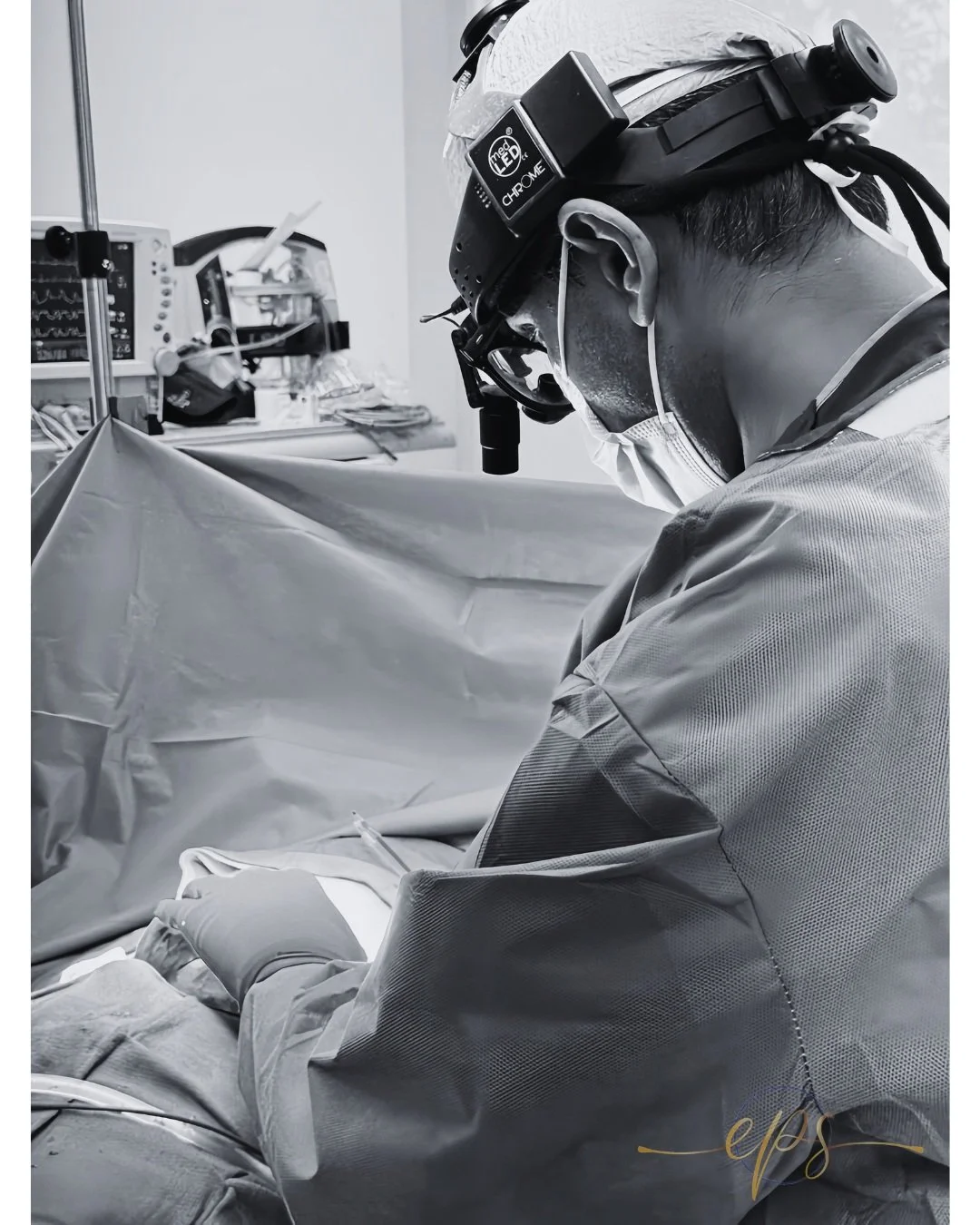
Residual capsule removal after explant is surgery to take out scar tissue capsule that stayed in the body after a previous implant removal. This leftover tissue can hold inflammatory cells and silicone particles. For many patients, fully clearing it is the step that finishes an incomplete explant. At Executive Plastic Surgery, breast implant removal is our specialty. Dr. Shaher W. Khan, Plastic Surgeon, evaluates patients whose earlier surgery removed the implant but left part of the capsule behind.
Your body forms a capsule of scar tissue around any breast implant. This is a normal response to a foreign object. During an explant, the implant comes out, but the capsule may or may not be removed with it.
Residual capsule removal after explant targets the capsule tissue that stayed behind. The goal is to remove what remains so that no implant-related tissue is left in the chest. Our residual capsule removal page covers this service in more detail.
Capsule tissue is left behind for several reasons. Some explant surgeries remove only the implant. Others remove part of the capsule but leave sections that are thin, firmly attached, or hard to reach.
Some patients also have had more than one set of implants. When an old capsule stays in place and a new implant goes in, a second capsule can form. Both layers then need attention during a later removal.
{video:18916|Dr. Shaher W. Khan explains what happens if you have two sets of capsules. It can hold inflammatory cells and silicone particles from the original implant. For patients who chose explant to address symptoms they linked to their implants, leftover tissue can mean the source of concern is still present.
Retained tissue also cannot be examined until it is removed. Without removal, it cannot be sent for pathology or microbiology testing.
A complete removal takes out the implant and the whole capsule. Our en bloc capsulectomy removes the implant and capsule together as one intact unit. A total capsulectomy removes the implant and the entire capsule as well.
A partial removal leaves some capsule tissue in place. This is the situation that leads patients to seek residual capsule removal after explant.
Partial removal is sometimes chosen when a surgeon decides that leaving tissue is acceptable for that patient. Patients may also not have known which approach was used until after surgery.
Our position is clear. Dr. Shaher W. Khan developed the Khan Procedure™ with the goal of complete removal. It removes the implant and capsule as a single, intact unit whenever surgically appropriate.
Capsules are often attached to the chest wall or to the tissue beneath the breast. Older implants and implants placed under the muscle can be especially challenging. A firmly attached capsule is one of the main reasons tissue gets left behind. It still can be removed with careful technique.
You may want an evaluation if any of these apply to you:
Patients who explanted because of concerns about breast implant illness often ask about leftover tissue for this reason.
Many patients worry about living long term with leftover capsule tissue they cannot see. Capsule tissue can retain inflammatory cells and silicone particles over time. Removing it settles the question and lets the tissue be studied.
Removing residual capsule offers several practical benefits:
Every residual capsule case is planned around the patient’s history. Dr. Shaher W. Khan reviews prior operative reports, how many implant surgeries were done, and where the implants were placed. The plan is then tailored to that history.
Our explant approach follows the same principles as the Khan Procedure™:
Some patients also ask about breast shape after removal. Our pseudo-lift technique restores a natural contour without a separate lift or additional incisions.
Recovery varies from patient to patient. Your care plan depends on how much tissue was removed and your overall health. Our team gives each patient personal aftercare instructions and follow-up visits. Because no drains are used with our technique, patients do not need to manage drain care at home.
Many of our patients travel from other states and countries. Our out-of-town patients page explains how we support patients who travel for surgery.
Residual capsule removal after explant is often more involved than a first explant. When you compare surgeons, ask:
Dr. Shaher W. Khan is double board certified in Plastic and Reconstructive Surgery and General Surgery. He is a Breast Implant Removal Specialist and Breast Implant Illness Specialist. You can learn more on our Meet Dr. Khan page.
If your records show partial removal, the remaining tissue can usually be addressed with a second surgery. Bring your operative and pathology reports to your evaluation. They help Dr. Shaher W. Khan understand what was done and what may remain.
Leftover capsule can retain inflammatory cells and silicone particles. It also cannot be tested while it stays in the body. These are the main reasons patients choose residual capsule removal after explant rather than leaving the tissue in place.
The only way to know is a careful review of your history and records. Dr. Shaher W. Khan looks at your prior surgeries, your current concerns, and any available imaging. You leave the evaluation with a clear answer about whether residual tissue is likely and what a tailored plan would involve.
Residual capsule removal after explant clears scar tissue that a previous surgery left behind. That tissue can hold inflammatory cells and silicone particles. Complete removal, laboratory testing of every capsule, and photographic documentation give patients a finished result and clear answers. If you are unsure whether your explant was complete, a review of your records with Dr. Shaher W. Khan is the place to start.
About the Author
Dr. Shaher W. Khan, MD
October 21, 2026
Learn more about breast implant illness, breast implant removal, or meet Dr. Shaher Khan.