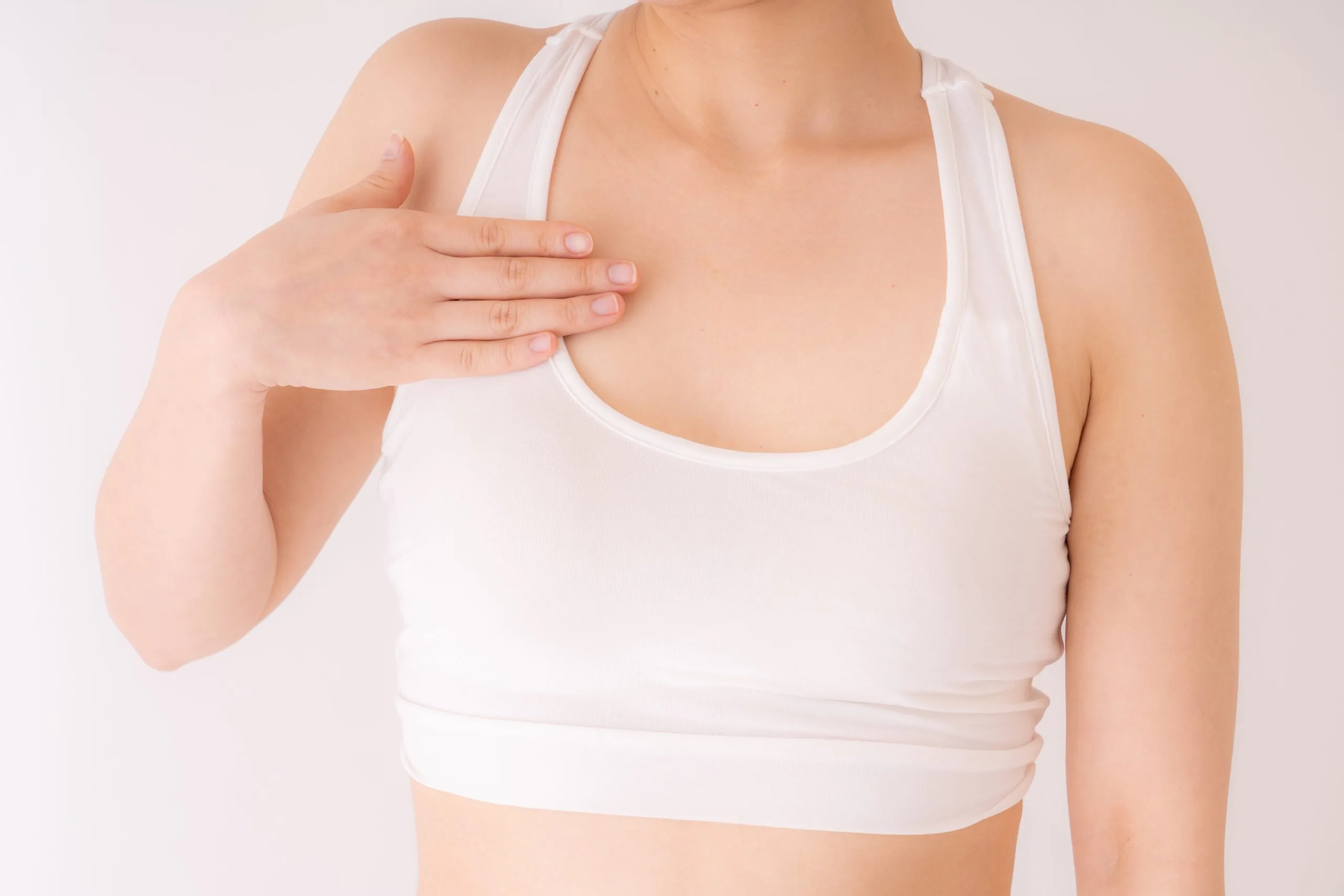
Breasts often look flat after implant removal because the implant supplied much of the volume and projection, and the natural tissue underneath has been stretched and thinned by years of pressure. Once the implant is gone, the skin and breast tissue need time to adjust, and early results can look deflated even when healing is on track. The question “Why Do Breasts Look Flat After Implant Removal?” comes up in nearly every explant conversation at Executive Plastic Surgery. This article explains what causes the change, what affects the final result, and the options available for restoring shape.
An implant presses on the breast tissue around it for as long as it is in place. Over time, this pressure can thin the glandular tissue and the fat layer. The skin also stretches to make room for the added volume. When the implant is removed, the space it filled is suddenly empty, and the thinned tissue has nothing pushing it forward.
The shape you see in the first weeks is not your final shape. Swelling, tissue settling and skin retraction all continue for months. Many patients notice the breasts gradually soften, round out and sit more naturally as the tissue recovers and fills the former implant space.
Patients commonly notice:
Less upper breast fullness
Loose or wrinkled skin in the lower breast
A lower nipple position than before
A softer, more natural feel
Temporary swelling that can mask the true shape
These changes reflect the transition from an implant-supported breast to a natural one.
Several factors shape how flat or full the breasts look after explant:

Implant size. Larger implants stretch the skin more and thin more tissue.
Time with implants. Longer periods generally mean more tissue thinning.
Implant placement. Implants above or below the muscle affect how the tissue settles.
Skin elasticity. Younger, more elastic skin tends to retract better.
Natural breast size before augmentation. Patients who started with more tissue usually keep more volume.
Pregnancy, breastfeeding and weight changes. Each can alter breast tissue and skin quality.
The capsule matters as well. This layer of scar tissue forms around every implant. At Executive Plastic Surgery, the goal is complete removal of the implant and capsule together as one system. Our team treats this as an important part of a thorough explant.
Some patients do look flatter right after surgery, especially in the upper breast. For many, this early flatness improves as swelling resolves and the tissue adapts. How flat you will look long term depends on the factors above, which is why each plan is built around the individual patient’s anatomy.
Most patients end up with breasts that are smaller and softer than they were with implants. Many describe the result as more natural and more like their own body. Breasts with good skin elasticity and a reasonable amount of natural tissue often regain a pleasing shape on their own. Breasts with significant stretching may benefit from added shaping at the time of explant.
For many patients, time does much of the work. The skin slowly tightens, the tissue settles into the former implant pocket and the breast takes on a more rounded contour. We encourage patients to judge their result only after the breasts have had several months to recover.

Dr. Shaher W. Khan, Plastic Surgeon, developed The Khan Procedure for explant surgery. This approach removes the entire capsule and implant as one system and is performed without drains. It can also include a breast enhancement that reshapes the breast without unnecessary cuts into the breast tissue itself. For patients worried about flatness, this can improve contour in the same surgery.
The capsule approach also depends on each patient’s situation. Options include en bloc capsulectomy, total capsulectomy and residual capsule removal for tissue left behind after a previous explant. Every specimen is sent for pathology and microbiology, and the surgery is documented with high definition photos and video.
Some patients want more volume than their natural tissue can provide. Breast flap uses the patient’s own skin, soft tissue and fat to rebuild the breast mound. We offer autologous reconstruction only, which means the new shape comes from your own tissue rather than another implant.
Recovery follows a general pattern, though every patient heals differently:
First few weeks: Swelling is at its peak, and the breasts may look flat or uneven.
One to three months: Swelling decreases, and the tissue begins to settle.
Three to six months: Skin retraction continues, and the shape becomes more defined.
Six to twelve months: Most patients see a result close to their final shape.
Wear the supportive garment or bra your care team recommends.
Follow all post-operative instructions closely.
Keep your weight stable, since weight shifts change breast volume.
Eat a balanced diet with enough protein to support tissue repair.
Stay hydrated and avoid smoking, which slows healing.
Give your body time before deciding on further procedures.
If your breasts still look flatter than you would like after full healing, a follow-up evaluation can help. Dr. Shaher W. Khan and our team review skin quality, remaining tissue, breast position and your goals. From there, we can discuss whether natural recovery is likely to be enough or whether reshaping or reconstruction makes sense. Patients who have not yet had explant surgery can address shape concerns during planning, so a pseudo-lift can be considered from the start.
Many of our patients travel from across the country for explant surgery. Our out of town page covers the support available to them.
How much natural breast tissue do I have?
How is my skin elasticity likely to affect my result?
Would a pseudo-lift help my shape?
Which capsule removal approach fits my situation?
Am I a candidate for breast flap surgery if I want more volume?
What should my breasts look like at six and twelve months?
Clear answers help you set realistic expectations and choose a plan that matches your goals.
Patients searching “Why Do Breasts Look Flat After Implant Removal?” are usually seeing the effects of stretched skin, thinned tissue and early swelling. Much of this improves with time. For patients who want more shape, The Khan Procedure with a pseudo-lift and autologous breast flap surgery offer ways to restore a natural contour. To learn more, visit our breast implant removal page.
Learn more about breast implant illness, breast implant removal, or meet Dr. Shaher Khan.