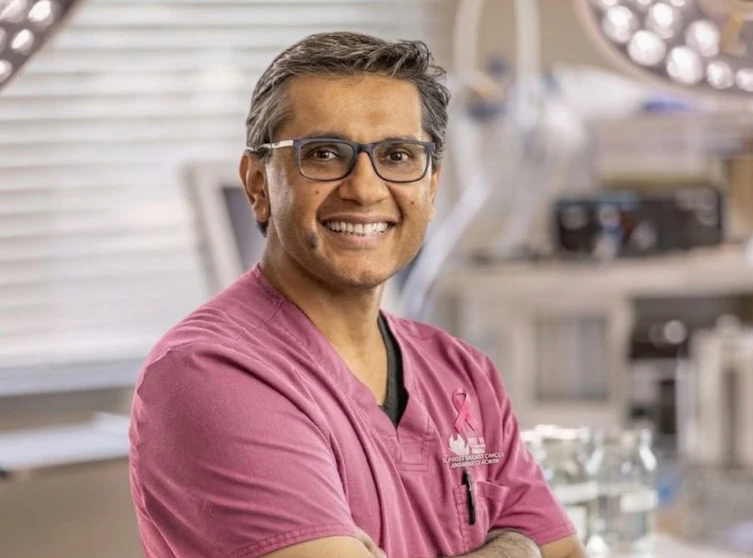
Breast Reconstruction rebuilds the chest and breast contours after a mastectomy or lumpectomy. At Executive Plastic Surgery, we offer autologous reconstruction only. That means Dr. Shaher W. Khan uses your own skin and fat from another area of your body to restore shape, with no implants placed. Dr. Shaher W. Khan is double board-certified in Plastic and Reconstructive Surgery and General Surgery. This guide covers the main types of reconstruction so you can compare them, and it explains where our own approach fits.
Breast reconstruction restores the shape of the chest after breast tissue is removed for cancer treatment or prevention. Some patients have it at the same time as their mastectomy. Others wait months or years.
Several methods exist. Some use implants and others use the patient’s own tissue. Our office focuses on tissue-based methods, including Flap surgery. For patients who prefer a smooth chest with no rebuilt mound, we also offer Flat closure.
You may be a candidate if you have had a mastectomy or lumpectomy, or if you are planning a preventive mastectomy. Patients who had implant-based reconstruction in the past and now want their implants removed may also consider rebuilding with their own tissue.
A good candidate is healthy enough for surgery and has enough donor tissue in areas such as the abdomen, back, thighs or buttocks. Dr. Shaher W. Khan reviews your cancer treatment history and your goals before recommending a plan.
Implant reconstruction uses a silicone or saline implant to create a breast mound. Our office does not place implants for reconstruction. We include this overview so you can compare your options.
Implant reconstruction does not require a donor site. Because of this, the first surgery is often shorter than a flap procedure.
Implants are medical devices with a limited lifespan. Many patients eventually need another surgery to replace or remove them. Our team regularly sees patients who want their reconstruction implants removed, and our breast implant removal care is built around that need.
Immediate reconstruction begins during the mastectomy. Delayed reconstruction happens later, often after cancer treatment is complete.
Implants can sit above the chest muscle or beneath it. Placement affects how the breast looks and feels over time.
A tissue expander is a temporary device that stretches the skin over several weeks. It is later swapped for a permanent implant.
Flap reconstruction moves your own skin and fat from a donor site to rebuild the breast mound. This is the reconstruction method we offer. Because the result is your own living tissue, it can soften and change with your body over time.
A flap does not wear out the way an implant can. Many patients value the long-term comfort and stability of tissue that feels like part of their body. Patients with an abdominal donor site often notice a flatter lower belly as well.
Flap reconstruction is a longer surgery than implant placement. It also creates a second healing area at the donor site. Recovery usually takes more time.
The abdomen is a common donor site because many patients have extra skin and fat there. A TRAM flap includes part of the abdominal muscle. DIEP and SIEA flaps take skin and fat while leaving the muscle in place.
This flap uses skin, fat and muscle from the upper back. It works well for patients with limited abdominal tissue.
These flaps use tissue from the inner thigh. They suit patients with smaller breasts or prior abdominal surgery.
Gluteal flaps take tissue from the upper or lower buttock. They are an option when other donor sites are not suitable.
Radiation can make the chest skin tighter and less flexible. A flap brings in healthy tissue with its own blood supply, so many patients who have had radiation are good candidates for tissue-based reconstruction. Timing is planned around the end of your radiation treatment.
Fat grafting moves small amounts of fat from one part of the body to the breast area. It is often used to refine contour or fill uneven spots after other reconstruction.
Fat is gently collected from an area such as the thighs or abdomen. It is then purified and placed where extra volume is needed.
Fat grafting adds modest volume and smooths contour. Some of the transferred fat is naturally absorbed by the body, so more than one session may be needed. It rarely rebuilds a full breast on its own.
After a lumpectomy, the treated breast may look smaller or dented. Partial reconstruction uses nearby tissue or a small flap to restore shape.
Reconstruction with reshaping can be done at the same time as the lumpectomy. This approach aims to keep both breasts closer in size and shape from the start.
Nipple reconstruction is usually the final stage. It is done after the new breast has settled, using a small amount of local skin to create projection.
Medical tattooing adds color to create the look of an areola. It can be done with or without a rebuilt nipple.
A nipple prosthesis is a soft, removable piece that attaches to the skin. It is a non-surgical choice for patients who do not want another procedure. Dr. Shaher W. Khan can talk through these finishing options with you during planning.
Your choice depends on your body type, your cancer treatment and your personal goals. Some patients want a rebuilt breast that feels natural. Others prefer flat closure and a smooth chest. Dr. Shaher W. Khan explains which options suit your anatomy so you can decide with full information.
Flap reconstruction involves healing at both the chest and the donor site. Rest is important in the first weeks. You will wear compression stockings after surgery to support circulation in your legs while you are less active. Our team gives you written instructions for each stage of recovery.
Keep your incisions clean and dry. Follow the dressing and bathing directions you receive. Avoid soaking in a bath or pool until Dr. Shaher W. Khan clears you.
A soft surgical garment supports the chest and donor area as swelling settles. Avoid underwire bras until you are cleared. Additional surgical garments are available through our office if you need more than one.
Short, gentle walks help circulation and are encouraged early on. Arm and shoulder movement increases gradually. Lifting and strenuous exercise wait until Dr. Shaher W. Khan approves them.
You will have scheduled post-op visits so Dr. Shaher W. Khan can check your healing at each stage. Many of our patients travel to us, and our out-of-town patients page explains how we support visitors through recovery. Our team speaks English, Spanish, Urdu/Hindi and Arabic. Reach out to us between visits if anything about your healing concerns you.
Breast Reconstruction can restore your chest shape after a mastectomy or lumpectomy. Options range from implants to tissue-based flaps, along with fat grafting and nipple finishing. Our office offers autologous reconstruction using your own tissue, along with flat closure for patients who prefer a smooth chest. You can learn more about Dr. Shaher W. Khan and our full list of breast procedures as you weigh your choices.
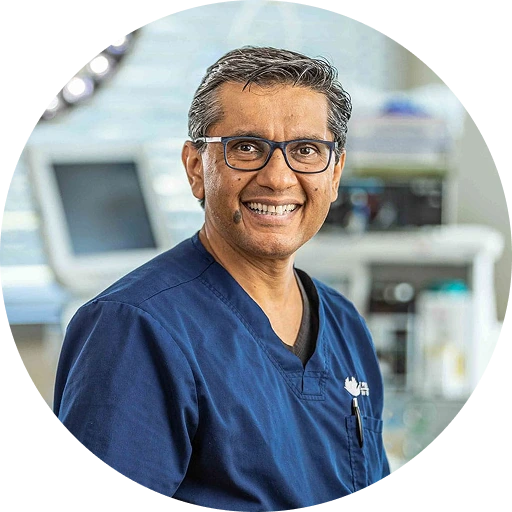
About the Author
Dr. Shaher W. Khan, MD
November 9, 2026
Learn more about breast implant illness, breast implant removal, or meet Dr. Shaher Khan.