Breast aesthetics after explant surgery depend on your skin quality, the size and age of your implants, and the technique used to remove them. Most breasts look smaller and softer at first, with less fullness at the top, then improve as the skin retracts over the following months. Many patients never need a separate lift.
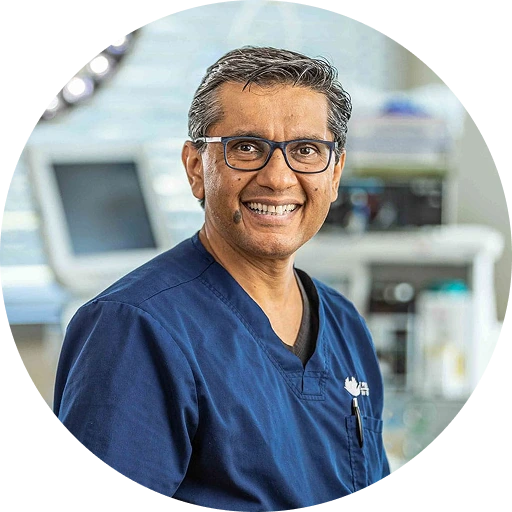
At Executive Plastic Surgery, Dr. Shaher W. Khan performs The Khan Procedure™, which includes a pseudo lift that reshapes the breast internally during implant removal, with no additional incisions.
This guide covers:
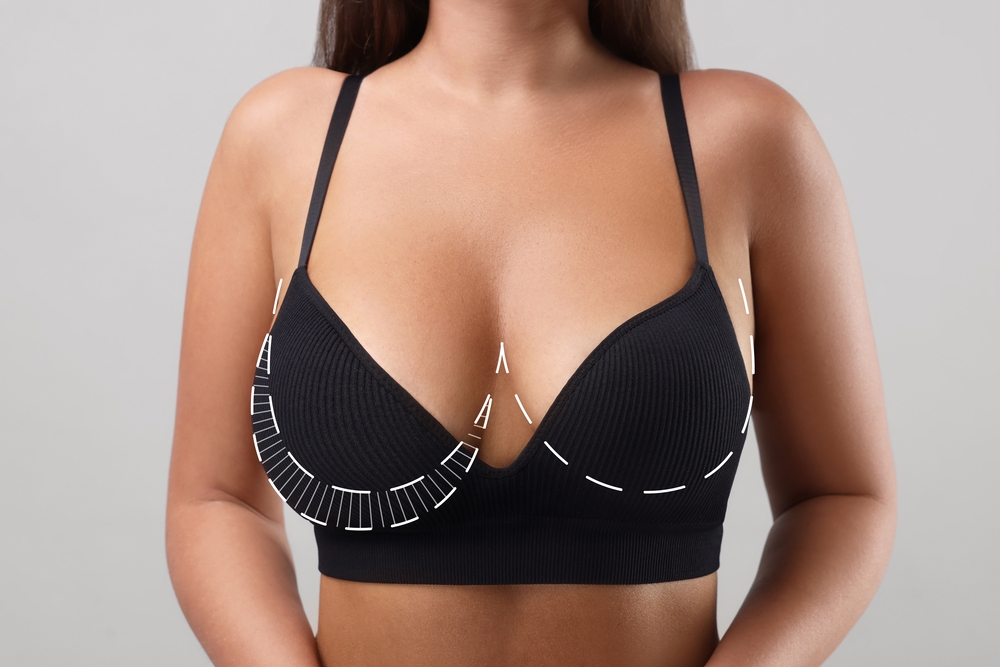
An illustration of the breast before and after an implant is removed, showing how skin and natural tissue adjust to a smaller volume.
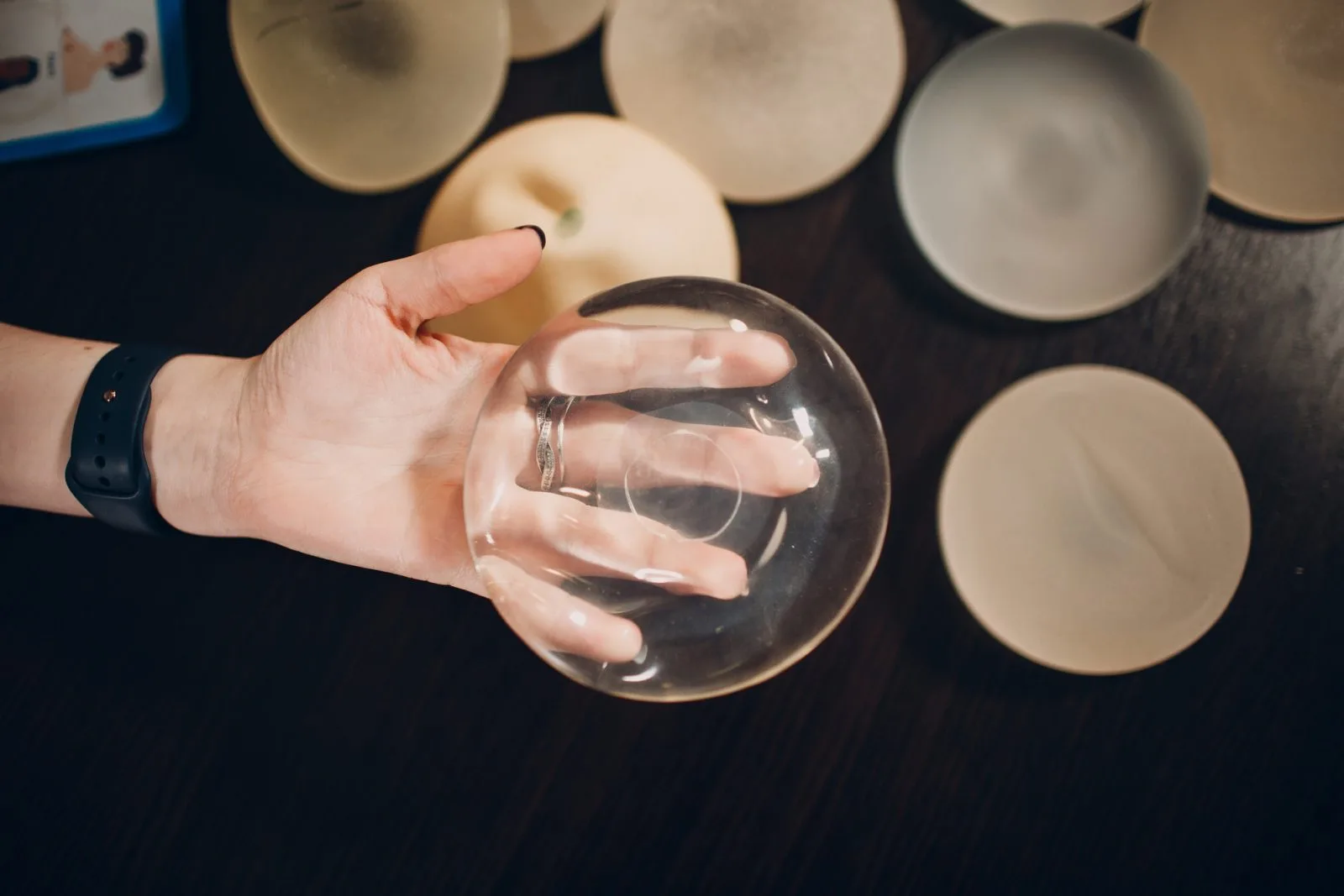
An implant takes up space in the chest for years. Skin stretches to cover it, and the natural breast tissue is pressed thinner. Your body also builds a capsule of scar tissue around the implant.
When the implant and capsule come out, the space they filled is gone. The skin and tissue that stretched over it now need time to adjust to a smaller volume.
The breast does not return to its exact pre-implant shape on the first day. It starts from a new baseline and keeps changing as swelling fades, tissue relaxes and skin tightens.
Every patient is different, but three changes come up often.
The upper pole is the top half of the breast, above the nipple. Implants add most of their visible volume here. After removal, this area often looks flatter. Your breast tissue may sit lower and slope more gently from the chest wall. Many patients find this looks more natural once healing is complete.
When volume leaves, the skin can look loose for a while. Some patients describe a deflated look in the first weeks. How much the skin rebounds depends on its elasticity and on how long it was stretched.
A larger implant can stretch the areola and pull the nipple lower. After explant, the nipple may point slightly downward or sit lower on the breast. In many patients, nipple position improves as the breast settles and the skin draws back.
Your own breast tissue is the foundation of your result. Patients with more natural tissue usually keep a fuller shape. Skin with good elasticity tends to retract well.
Several factors affect how skin responds:
Dr. Shaher W. Khan looks at all of these before recommending any added procedure.
Larger implants stretch skin more. Implants that stayed in place for many years give the skin longer to adapt to that stretch. Both can mean more looseness after removal.
Even so, age alone does not decide the outcome. Many older patients do not need a lift after a proper explant and enough healing time.
How the implant and capsule are removed shapes what comes next. With The Khan Procedure™, Dr. Shaher W. Khan removes the implant and the surrounding capsule together as one intact unit whenever surgically appropriate. This is called an en bloc capsulectomy. When a single intact unit is not possible, a total capsulectomy still removes the entire capsule.
Our 100/100/0 Rule™ uses photographs to document the result: 100% of the implant and capsule are removed, 100% of the time, with 0% of the capsule left behind.
The Khan Procedure™ also uses a drainless technique and a built-in pseudo lift. Because the breast is reshaped during the same surgery, many patients avoid the added incisions of a separate lift. You can read more about our full approach to breast implant removal.
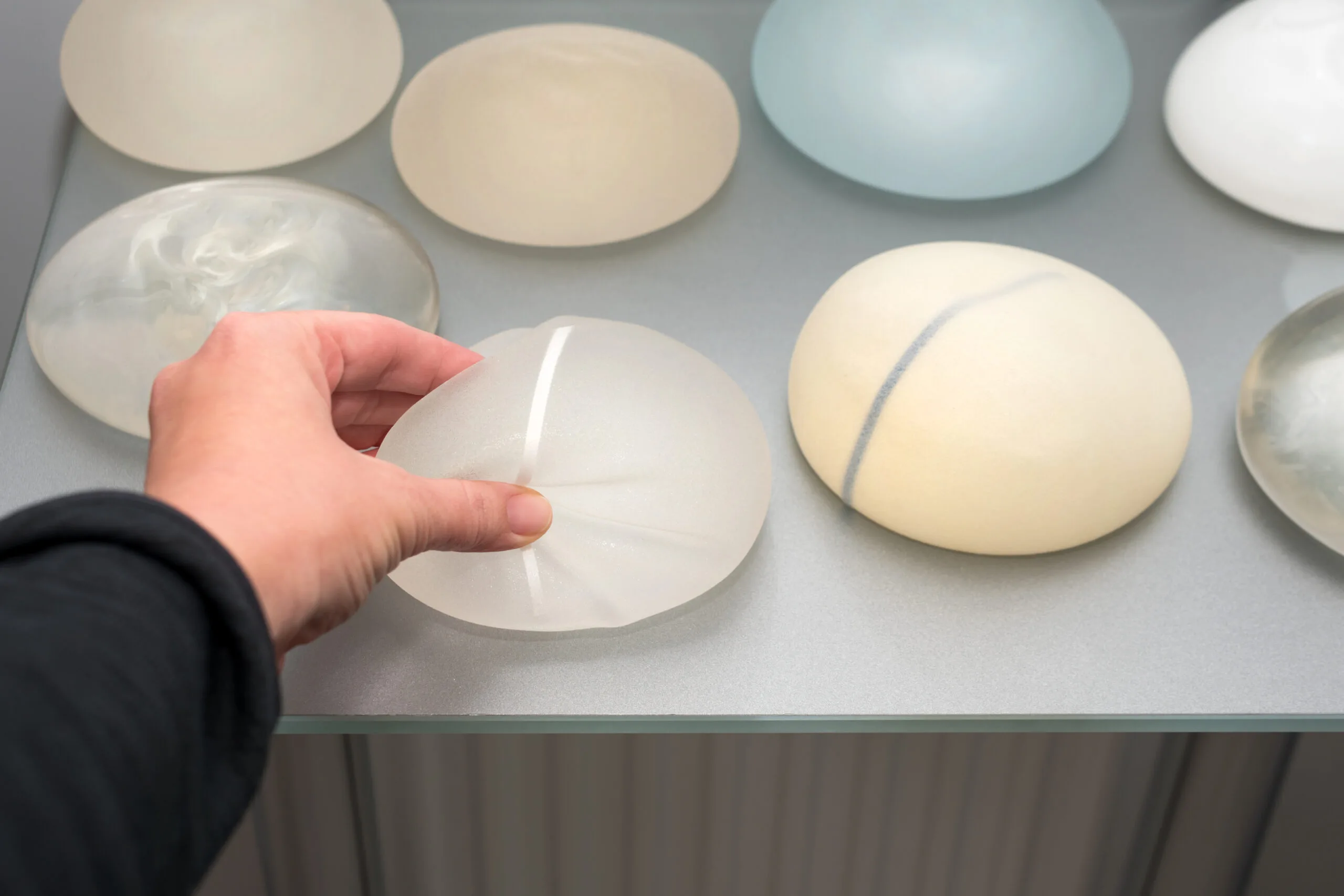
A diagram of the implant and its surrounding scar tissue capsule, showing how both come out together as one intact unit.
For many patients, time is the first option to consider. Skin can tighten on its own once the stretch from the implant is gone. A careful explant combined with patience often produces a result that needs nothing more.
Breast aesthetics after explant surgery often improve steadily for months. Judging the final look too early can lead to surgery you do not need.
Some patients do want help with shape or nipple position after healing. There are two main paths.
A traditional breast lift removes extra skin and raises the nipple using incisions on the breast. It may help when a large amount of loose skin remains or when the nipple sits well below the breast crease. The trade-off is added scarring on the breast. Our team discusses whether that trade-off makes sense for your goals.
A Pseudo lift is a scar-conscious contouring technique performed only during implant removal. It addresses skin laxity and sagging from the inside. It avoids the extensive incisions of a traditional lift and makes no unnecessary cuts into the breast tissue itself.
The goal is a subtle, lifted contour. For many patients, this internal reshaping plus time for the skin to retract is enough.
Some patients miss the volume their implants once gave them. Many search for fat grafting when they want to add volume with their own tissue. Fat grafting is not part of our explant approach.
When a patient wants more shape or volume, our team focuses on the options we offer:
Many patients also find they are comfortable with a smaller, natural size once their breasts have settled.
Breast flap, also called autologous flap reconstruction, uses your own skin, soft tissue and fat to rebuild the breast mound. This tissue comes from a donor site such as the abdomen, back or thighs. Because it relies on your own tissue rather than a device, it is designed for long-term comfort and stability.
Our breast reconstruction after mastectomy or lumpectomy uses autologous methods only. Patients who prefer a smooth, flat chest after mastectomy can also consider Flat closure.
A diagram showing common donor areas, such as the abdomen, back and thighs, used in autologous breast flap surgery.
Many patients assume they will need a lift after explant. Often they do not.
A traditional lift may be worth discussing if, after full healing:
Flap surgery may suit patients who have lost a significant amount of breast tissue, who have had breast cancer surgery, or who want to restore volume using their own tissue.
For everyone else, the pseudo lift built into The Khan Procedure™ and patient healing time usually guide the result.
Your plan starts with a conversation about your implant history, your symptoms and your goals for your shape. Dr. Shaher W. Khan is double board-certified in Plastic and Reconstructive Surgery and General Surgery, and he focuses his work on breast implant removal. He examines your skin quality, tissue thickness and nipple position. He then explains whether the pseudo lift alone is likely to meet your goals or whether another procedure should be considered after healing.
You leave with a clear picture of:
Our team speaks English, Spanish, Urdu/Hindi and Arabic. Many of our patients travel from across the country and abroad, and our out-of-town patients page explains how we support them. You can learn more about Dr. Shaher W. Khan’s background on his Meet Dr. Khan page.
Breast aesthetics after explant surgery change over time. Most breasts start out smaller and flatter on top, then soften and tighten for up to a year. Your skin, your implant history and the removal technique all shape the result.
The Khan Procedure™ combines complete capsule removal with a built-in pseudo lift. Because of this, many patients never need a separate lift. For those who want more, a traditional lift or autologous flap surgery can be planned once healing is complete.
Learn more about breast implant illness, breast implant removal, or meet Dr. Shaher Khan.