
If you’ve been living with symptoms you can’t quite explain – fatigue that won’t lift, joint pain, brain fog, hair loss, or a general sense that your body just isn’t working right – and you suspect your breast implants might be the cause, you’re not imagining things. Thousands of women report the same pattern, and many find real relief once their implants and the surrounding scar tissue are fully removed.
That’s the core benefit of The Khan Procedure™: a specialized explant technique developed by Dr. Shaher Khan that focuses on removing 100% of the implant and capsule, every time, so you’re not left wondering if the job was really finished.
A lot of women considering explant surgery have already done their research. They know they want the implants out. What they often don’t realize is that removal can be done in many different ways, and the results aren’t always the same.
Some surgeons remove the implant but leave part of the scar capsule behind. Others cut through the capsule rather than removing it intact, which can spread bacteria or silicone debris into surrounding tissue. For women dealing with Breast Implant Illness, an incomplete removal can mean symptoms linger even after surgery, which is often confusing and discouraging after going through a major procedure.
This is where The Khan Procedure™ sets itself apart. It was built around one goal: total, verified removal, so patients can move forward without lingering doubt.
One of the most reassuring parts of this approach is what Dr. Khan calls the 100/100/0 Rule™: 100% of the implant removed, 100% of the capsule removed, and 0% left behind.
What makes this especially meaningful is that it’s not just a claim – it’s documented. Patients receive photographic proof that the tissue was fully removed. For someone who has spent months or years wondering what’s happening inside their body, having visual confirmation can be an enormous relief.
A few reasons this matters:
Leftover capsule tissue can continue to harbor bacteria or biofilm, which may contribute to ongoing symptoms
Partial removal sometimes requires a second surgery down the road
Seeing the evidence yourself removes the guesswork and gives you something concrete to point to as you heal
Whenever it’s surgically appropriate, the implant and its capsule are removed together as one intact unit, a technique known as en bloc capsulectomy. This matters because cutting into the capsule during removal can allow bacteria, silicone particles, or other material trapped inside to leak into the surgical site.
Removing everything as a single, sealed unit reduces that risk and gives your surgeon a cleaner, more controlled field to work in. It’s also the reason 100% of capsules removed by Dr. Khan are sent out for both pathology testing (including CD30 analysis to screen for BIA-ALCL, a rare lymphoma linked to textured implants) and microbiological cultures. You’re not just getting the implants out – you’re getting real answers about what was going on inside your body.
Explant surgery can sound intimidating, especially if you’re already not feeling your best. A few features of this technique are specifically aimed at making recovery gentler:
Drainless technique – no surgical drains means less discomfort at home and one less thing to manage during healing
Twilight anesthesia – deep sedation is used instead of general anesthesia in many cases, which tends to come with fewer side effects and a smoother wake-up
Natural “pseudo-lift” – the technique is designed to restore a natural breast contour without needing a separate lift surgery or additional incisions
Taken together, these choices are meant to reduce both the physical toll of surgery and the number of follow-up procedures you might otherwise need.
If you’re dealing with Breast Implant Illness, you’ve likely already been through a lot: doctors who dismissed your symptoms, months of searching for answers, and the fear that removing your implants might not even fix the problem. That fear is valid, and it’s one of the biggest reasons a thorough, verified technique matters so much.
Knowing that your surgeon is committed to complete removal, backed by photographic documentation and lab testing, can ease a lot of that anxiety before you even get to the operating room. You deserve a surgical plan built around clarity, not guesswork, and around a surgeon who treats “do no harm” as a guiding principle rather than a slogan.
Explant surgery is rarely just about appearance. For most women pursuing it, it’s about reclaiming their health and getting real answers about what’s been happening in their body. A technique built around total removal, careful documentation, and thoughtful recovery planning gives you the best chance at both.
If you’re exploring breast implant removal and want a clear, honest conversation about what to expect, Dr. Shaher Khan and his team at Executive Plastic Surgery welcome the opportunity to talk through your symptoms, your history, and your goals. With locations in Bloomfield Township, MI, and Northridge, CA, and support in place for patients traveling from out of town, getting professional care doesn’t have to mean navigating it alone.
Your body has been trying to tell you something. Getting a straight answer and a surgical plan built on transparency might be the next right step.
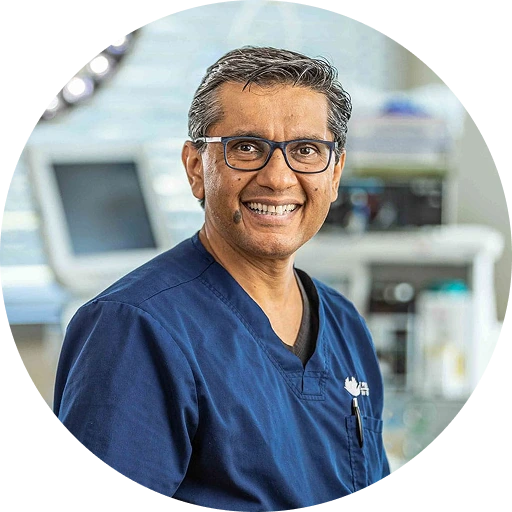
About the Author
Dr. Shaher W. Khan, MD
September 15, 2026
Learn more about breast implant illness, breast implant removal, or meet Dr. Shaher Khan.